Last Orders, First Sparks: Why UK Daters Are Saying Yes to Round Two
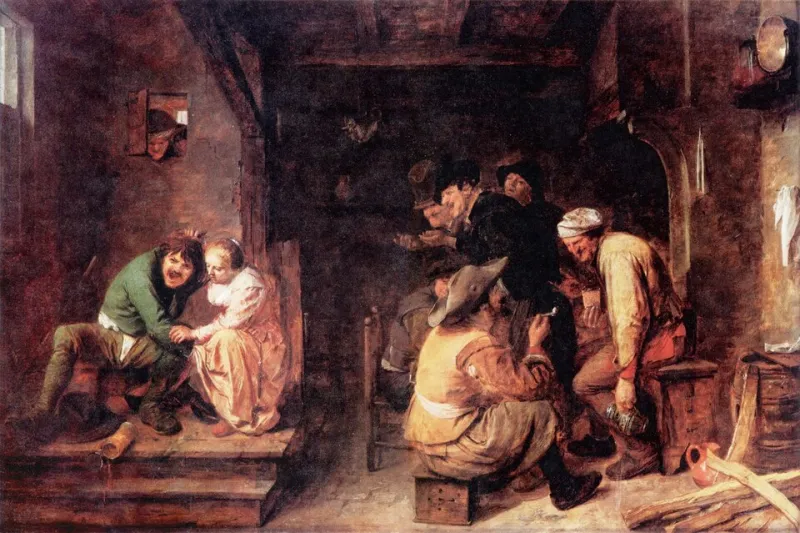
Photo: Adriaen Brouwer, Public domain, via Wikimedia Commons
Picture it: it's a Thursday, you're three sips into a pint in a dim pub corner, and the person across from you has just made a joke so daft you snort. You don't want the night to end at the bottom of the glass. So you say it: 'I'm having a really good time. Shall we do this again next week?' They grin. Date two is pencilled in before date one has even paid up.
That used to be considered reckless. For years, the tactical one-drink date was UK dating's safety rail: low stakes, easy exit, no obligation to pretend you like someone just because you've already split a bowl of chips. You'd sip, assess, and vanish into the night with your dignity and your Oyster card intact.
In 2026, the mood has shifted. Daters are increasingly locking in round two before round one is over. Not as a grand romantic gesture, but as a small, honest act of momentum. It looks like a pub quiz team name scribbled on a napkin. It sounds like 'I'd love to see you again — same time next week?' It feels like a late-night train platform where nobody is quite ready to say goodbye.
The tactical pint is losing its grip
The one-drink rule made sense in an era of endless options and low trust. It was a buffer against wasted evenings, awkward chemistry and the specific British horror of being trapped in a Wetherspoons with someone who won't stop talking about their ex. Cautious? Yes. Sensible? Often. A bit boring? Increasingly.
What's changing is that we're tired of treating every first date like a job interview with a probation period. The apps have given us more choice, but they've also given us admin fatigue. Another 'hey', another 'how's your week been', another will-they-won't-they text thread. When someone makes you laugh so hard you forget to check your phone, the appeal of pretending to be nonchalant starts to fade.
There's also a post-pandemic social hangover that never quite lifted. We know how quickly plans can disappear. We know that a good vibe is not a guarantee. So when it's there, some of us are deciding to name it early rather than play it cool and hope it survives the week.
Why we're booking round two before last orders
Because the first date is no longer the only place chemistry happens. Sometimes it arrives halfway through a story about your disastrous attempt at sourdough. Sometimes it's the way they ask the bar staff how their shift is going. Sometimes it's a shared look when the pub quiz master reads out a question so bad it's almost poetic. If you wait until the next morning to say 'I'd like to see you again', you're asking that spark to survive a sleep and a group chat.
Booking a follow-up mid-date is not the same as planning a wedding. It's a vibe check with a calendar attached. It says: I'm enjoying this enough to make room for more. It also gives both of you permission to be honest without making the rest of the evening weird. If they're not up for it, they can say so. If you're not sure, you can say that too.
And there's something deliciously unbothered about a date that doesn't pretend to be casual when it's clearly going well. The one-drink rule was born from self-protection. The second-date booking is born from something warmer: self-trust.
How to suggest date two without applying pressure
The trick is to make the offer light enough to decline and specific enough to be real. 'We should do this again' is a lovely sentence, but it's also the romantic equivalent of 'let's get lunch sometime'. It evaporates. Try something with a hook.
A few scripts that land well:
- 'I'm having a really good time. I'd love to do this again — no pressure if you'd rather sleep on it.'
- 'I've got a silly idea: same time next week, different pub?'
- 'I don't want to hijack tonight, but I'd like to see you again. Shall we put a pin in it?'
- 'Would you be up for round two on Thursday, or is that too much?'
Notice what these have in common: they name the desire, leave the exit open, and don't make the other person responsible for your ego. If the answer is 'yes', brilliant. If the answer is 'maybe' or 'not sure', that's information, not a rejection of your entire personality. If the answer is a polite no, you finish your drink, you keep your dignity, and you don't turn the rest of the date into a hostage negotiation.
Double-date nights: wild-warm magic or amber flag?
There's a newer variation on this trend: the double-date night. You meet for one drink, then someone suggests moving to a second place with another couple, or joining their mates at a pub quiz. At its best, it's wildly warm. It says: I like you enough to show you my people. It breaks the intensity of one-on-one eye contact. It gives you shared jokes and a built-in story for later.
At its worst, it's a red flag in a nice coat. Watch for the person who books an entire weekend after forty minutes, who ignores your 'I'm not sure' because they've already decided, or who uses the group as a buffer because they don't actually want to be alone with you. The difference is consent and pace. A double-date night should feel like an invitation, not a trapdoor.
Ask yourself: is this person checking that I'm having fun, or are they performing a version of us for an audience? Are there escape routes, or am I being swept along? Do I feel excited, or do I feel managed? Wild-warm magic leaves room for both people to say 'actually, I'm knackered' without it becoming a crisis.
The new etiquette: enthusiasm with an exit route
The one-drink rule is dead. Long live the one-drink rule's cousin: the second-round suggestion. It's not about rushing. It's not about ignoring red flags because the banter is good. It's about refusing to play it so cool that you freeze your own joy.
So next time you're in a pub corner, three sips in, and you realise you don't want the night to end, say it. Keep it kind. Keep it clear. Keep the door open for a no. Then order another drink, or don't. Either way, you've done the wild-warm thing: you've told the truth about what you want.